Showing posts with label my published letters. Show all posts

26 February 2012

My published letter – 22/2

Got a letter published at long last, though only in my local paper (various ones sent to the major papers were not published – maybe they are tired of me!). It was in response to a letter in the previous week’s paper, commenting on “ ‘Jungle’ fear on units in Bentleigh”, about yet another unwanted housing overdevelopment of a local site. The letter was slightly edited – wonder why the [bracketed] phrase was removed?

I am a longtime Bentleigh resident, and am dismayed to see the ugly new developments now blighting almost every street. Houses and pleasant gardens are demolished every week to make way for massive monstrosities, and my suburb, like many others, seems to have become a permanent construction zone [with uncaring developers apparently given free rein by council and planning laws]. The ongoing destruction is highly stressful and is destroying what made the suburb livable.

The Glen Eira Council have also been holding Community Plan Consultations where residents can voice their concerns over local issues until 29 February. I posted in the online forum (as “Suzanne”). I don’t know how effective it will be, or if this is only a token gesture to give the appearance of responding to community concerns. A lot of this is over ongoing overdevelopment (no thanks to Melbourne’s unwanted population growth, which is outside of Council control) and inappropriate development. The council just seems to “rubber-stamp” new developments without caring what impact these have. I hate to think what my suburb and others will look like in another decade – its once-pleasant amenity is relentlessly being destroyed.

09 December 2009

My published letter – 9/12

This was in response to a real estate ad in the previous week’s local newspaper. My letter got edited a bit.

Original version:

The full-page real estate ad in the 3/12 [local paper] that gloated over rising house prices is an example of how warped by greed the market has become. Increasing property values also mean council rates rise, thus the cost of living goes up. Population growth means overcrowding and overdevelopment, making life ever more stressful for residents. The housing market is out of control, favoring greedy investors and developers, and it is time this trend was reversed back in favor of those who simply want a place to live in. No government so far seems to have the will to implement these measures, however, by curtailing population growth.

Edited for print version:

The full-page real estate ad in the [local paper] on December 2 that gloated over rising house prices is an example of how warped by greed the market has become.

Increasing property values also mean council rates rise, thus the cost of living goes up. The housing market is out of control, favoring greedy investors and developers, and it is time this trend was reversed back in favor of those who simply want a place to live.

13 November 2009

My published letter, 13/11

In response to “Shut the door on Kiwis to curb growth says MP”, Herald-Sun, 12/11:

Migration ruining land, wildlife

Thank you, Kelvin Thomson, for giving concerned political constituents a voice on the issue of overpopulation (“MP wants to slash Kiwi migrant influx”, November 12).

For years, this festering issue has been taboo on both sides of Parliament and rampant population growth has been regarded as a fait accompli.

But as we all know, this growth is the direct consequence of government policy, or lack of it.

At the moment, our population destiny is being driven by excessive immigration and ridiculous baby bonuses, the result of smart lobbying by the big end of town who will profit handsomely from this population bonanza.

Yet we are watching our environment being destroyed and our wildlife decimated as record levels of land-clearing and habitat loss occur, all in the pursuit of more humans.

– Tony Smith, Burwood

People explosion damages nation

Thank you, Kelvin Thomson, for speaking out on the problems caused by excessive population growth.

If this growth is not restricted, the quality of life Australians have taken for granted will continue to decline and the environment will be destroyed.

– Suzanne McHale

This isn’t just a New Zealand thing. We need to restrict immigration from everywhere. This obsession with population growth is killing our country.

– Ang

The Age, 13/11:

Growth unstoppable

An important element that appears missing from your welcome coverage of the projected population increase is the innate momentum of growth. If our population is to grow to 35 million by 2050, it will not stop there, but will continue for at least another 30 to 40 years.

This is well illustrated by Australian Bureau of Statistics figures on Australia’s present rate of growth. Even though the fertility rate is below replacement rate, our population would continue to grow until the mid-2030s even in the absence of net immigration.

– John Coulter, Scott Creek, SA

Silly boat people. If only they had said they want to do a course in English, not classes. Then they would be fast-tracked into the country for a lead role in the great immigration scam: the international student rort.

– Tricia McDonald, Malvern East

But there are also deniers: “Population fear is nonsense: Tanner”, 13/11. Finance Minister Lindsay Tanner believes the idea of Australia being overpopulated is nonsense, as other countries have far higher population densities. He does not take into account that much of the Australian continent is desert and its soil is old and infertile, thus it cannot support a high population. Even if it could, a high population density is not desirable as crowding people together is an unpleasant way to live.

14 August 2009

My published letter – 14/8

Published in the Herald-Sun; a response to an article on road rage:

With continuing population growth, it’s no surprise that road rage incidents are increasing (“Road rage hits new low in Melbourne”, 12/8). Overcrowding induces stress, and such incidents are a symptom of this frustration.

A lot of social and environmental problems would be alleviated by there being fewer people, but not many want to acknowledge that.

27 May 2009

My published letter – 27/5

Got my letter in response to yesterday’s article published in today’s Herald-Sun:

The Water Minister’s refusal to consider restricting population growth to conserve dwindling water supplies (“Population Boost”, May 26) is symptomatic of a government addicted to growth – despite the negative social and environmental consequences. The Brumby Government appears obsessed with protecting its mates in the building industry.

30 April 2009

My published letter – 30/4

Got published, in today’s Herald-Sun! Same as my last entry (only slightly edited), but I’ll reproduce it below, along with another:

Plan to restrict population instead

Planning Institute of Australia Victorian president Jason Black can surely not be serious in proposing to destroy pleasant, leafy suburbs and replacing them with hideous high-rise apartments (“Bulldoze the ‘burbs”, April 29). Any government that tried that strategy would face a citizens’ revolution. Far better to restrict population growth so housing demand is lessened and amenity can be preserved, though that would not please the greedy developers and construction industry.

– Suzanne McHale

Planners, politicians are out of touch

The Planning Summit referred to in your report, “Bulldoze the ‘burbs” (April 29) was for professionals, not for residents. It was too expensive for us, and they did not want any of us speaking. Planners and politicians are out of touch with reality and out of touch with the people.

It is time we had a summit on population. Do we want Melbourne to have a population of five million? Would it stop there? Let’s discuss alternatives. Let the people have a say. I challenge the Government to organise a population summit that includes residents.

– Mary Drost, convener, Planning Backlash (a network of 150 resident groups), Camberwell Plan to restrict population instead

“High-rise plan to halt the sprawl”, The Age, 30/4. Another plan to accommodate a projected population of 5 million by building ugly high-rise apartments along transport routes and shopping centers. These would overshadow the streets.

“Australia’s Dry Run”, National Geographic, April 2009. This is an alarming report on the degradation of a major river system in Australia (the Murray-Darling Basin) and the consequences for the people and animals dependent upon it (the river has been a major source of irrigation and water supplies). (If the article is taken offline, I will reproduce it below.) It shows how human carelessness can destroy an ecosystem. The capital city of Adelaide is precariously dependent upon the Murray for its water supply, and is now on permanent water restrictions.

28 March 2009

My published letter – 28/3

Response to the opinion piece mentioned in my previous (27/3) entry. Worded this much the same as the previous IVF letter, but with mention of the article.

More urgent needs for money

I couldn’t agree more with Jill Singer (“The IVF revolution is money badly spent”, March 26).

Infertility is not a disfiguring, painful or life-threatening condition. Taxpayers’ money should not be used to artificially bring more people who would not otherwise be here into an already overpopulated world.

There are far more urgent health and social programs that need funding.

“The rise of the little emperor: How the one-child family could soon be in the majority”, Daily Mail, 28/3. More parents in Britain are choosing to have one child for various reasons. The article writer sounds vaguely alarmed at this trend, but I can’t see it as a bad thing – small families should be encouraged (and large ones discouraged) to help combat excessive population growth. And I can’t comprehend why women actively want large families (aside from the pragmatic reason of having “backups” if one child should die).

23 March 2009

My published letter – 23/3

Got the IVF letter (22/3 entry) published in today’s The Age:

Needs versus wants

Lisa Campbell (Letters, 21/3) needs to learn the distinction between needs and wants (hers are the latter). Infertility is not a disfiguring, painful or life-threatening condition. Before IVF, people had to deal with infertility and find other means of fulfilment. Taxpayers’ money should not be used to bring people into an already overpopulated world who would not otherwise be here – there are far more urgent social programs that need funding.

A related article from 22/3 Herald-Sun:

IVF babies warning

British couples having IVF treatment will be warned for the first time that their children have a higher risk of genetic flaws and health problems.

IVF babies may be up to 30 per cent more likely to suffer from heart valve defects, cleft lip and palate and digestive system abnormalities. They also have an increased risk of rare genetic disorders such as Angelman syndrome.

One reason for infertility in older women and men is poor-quality eggs or sperm (which decline as they age), so they obviously should not be passing these defects on. Another reason for men:

Infertility caused by DNA defects on the Y chromosome is passed on from father to son. If natural selection is the primary error correction mechanism that prevents random mutations on the Y chromosome, then fertility treatments for men with abnormal sperm (in particular ICSI) only defer the underlying problem to the next male generation. (Wikipedia: Infertility)

“Britain set to become most populous country in EU”, Guardian, 22/3. Britain is going to be an increasingly unpleasant place to live in as it gets ever-more overcrowded. Exacerbating the problem is the thousands of refugees anticipated as a result of climate change.

In addition, there is the issue of humanitarian responsibility. Britain is likely to be one of the few nations to survive the worst effects of climate change while other nations, particularly those in the developing world, have their farmland and fishing grounds destroyed. It could be argued that the UK has a moral duty to provide shelter for as many refugees as our shores can support.

It could also be argued that Britain has a greater responsibility to its own citizens first and foremost, and should not take in more people than it can handle.

But many climatologists believe that by then life on the planet will already have become dangerously unpleasant. Temperature rises will have started to have devastating impacts on farmland, water supplies and sea levels. Humans – increasing both in numbers and dependence on food from devastated landscapes – will then come under increased pressure. The end result will be apocalyptic, said Lovelock. By the end of the century, the world’s population will suffer calamitous declines until numbers are reduced to around 1 billion or less. “By 2100, pestilence, war and famine will have dealt with the majority of humans,” he said.

One of the few places to survive the worst impacts will be Britain. “Our climate will be one of the least affected by global warming,” added Lovelock. “As a result, everyone will want to live here. We will become one of the world’s lifeboats. The trouble, of course, will be that, even if we wanted to, we will not be able to pick up everyone. There will be some hard decisions to make.”

If governments of the least-afflicted countries wish their societies to survive, they will have to be brutally pragmatic.

21 February 2009

My published letter – 21/2

I did get my letter I sent to The Age yesterday published :-), so I’ve reproduced it below, along with another:

Our right to protest

Jason Dowling (Comment & Debate, 20/2) says Port Phillip Council “succumbed to strong opposition” to the proposed skate park in Albert Park Reserve, and “has withdrawn the planning permit”. Another interpretation would be that many previous councillors were thrown out at the November elections in favour of candidates who specifically campaigned to save this particular area of parkland from inappropriate development.

It is easy to attribute planning outcomes to ill-defined terms such as NIMBYism, or people power, depending on which side of the issue you stand. I doubt such simplistic labels really help the planning debate.

The elephant in the room that the article fails to mention is climate change, and that more people are now prepared to stand up and be counted to save Melbourne’s precious areas of public green space.

The Age has played a strong role in raising community awareness on the importance of saving our parks. The protection of public parkland deserves to be recognised as a legitimate planning concern.

– Jonathan Raymond, St Kilda

NIMBY and proud

Many residents are “NIMBYs” because virtually all contemporary developments seem to consist of enormous ugly houses that fill up a whole block, leave no room for vegetation and loom intrusively over other houses.

Once-pleasant leafy suburbs are turning into high-density concreted wastelands, thanks to selfish and greedy developers, councils, the residents who choose such designs, and a State Government determined to encourage unsustainable population growth.

Residents who care for Melbourne’s future liveability will continue to object to this uglification and the erosion of much-needed open spaces.

– Suzanne McHale

28 January 2009

My published letter – 28/1

First letter of the year in The Age, 28/1 :-). A response to an opinion piece about the book Overloading Australia, the subject of “Population Australia’s ‘big threat’ ”, The Age, 24/1.

It’s all about impact

For Brigid Delaney (Comment & Debate, 27/1) to imply that those who oppose excessive immigration are racist misses the point of the book Overloading Australia. The reason for limiting numbers is that Australia (or any nation) cannot continue to import huge numbers of people – no matter where they come from – without harmful social and environmental impact (already evident in Victoria). If we want to keep Australia liveable in future, we must reduce population growth.

– Suzanne McHale

Growth is the issue

Brigid Delaney trots out the usual spurious arguments against Overloading Australia.

The authors focus on immigration simply because it is the main driver of population growth, and it is population growth, not immigration per se, that is the problem.

No one who supports the basic thrust of the book denies that immigrants have made a contribution to this nation. No one wants to end immigration.

What we want is immigration that approximates emigration in size so you still get a flow of new people that can enrich our society, but not so many as to overload it in environmental terms. We are certainly on a trajectory for overload, if we have not passed it already. We should stop living “high on the hog” but, as well as getting off the hog, we need to get our numbers stabilised (and even reduced) as soon as possible.

– Jenny Goldie, president, Canberra region, Sustainable Population Australia, ACT

Sheila Newman also has a response on her blog: “Growthist responses to Overloading Australia”.

“Eight Is Enough”, New York Times, 27/1. A woman recently gave birth to 8 premature infants, no doubt with the assistance of fertility treatment. There is an option to reduce (abort) the extra foetuses. Creating such pregnancies is an irresponsible use of medical science as it puts great strain on the mother, as well as the taxpayer-funded medical system that is obligated to take care of the usually ill and sometimes defective infants. I agreed with this comment:

There is no way that people who push litters of fragile humans into our nation, society, and ecosystem should be accoladed and rewarded. I am weary of paying for this sort of thing, then facing demands that I also jump up and down and coo.

Repeal the tax deduction for adding more humans to the planet. If people want to be rewarded for breeding, then let them prove when their ONE kid is 25 that they raised a productive, healthy contributor to society. Then we can pay them a successful parenting annuity for 18 years amounting to what the tax break/deduction would have been.

I’m sick of the baby fetish, and I’m sick of pretending. Natalism has become our nation’s most disturbing fetish.

– Michael

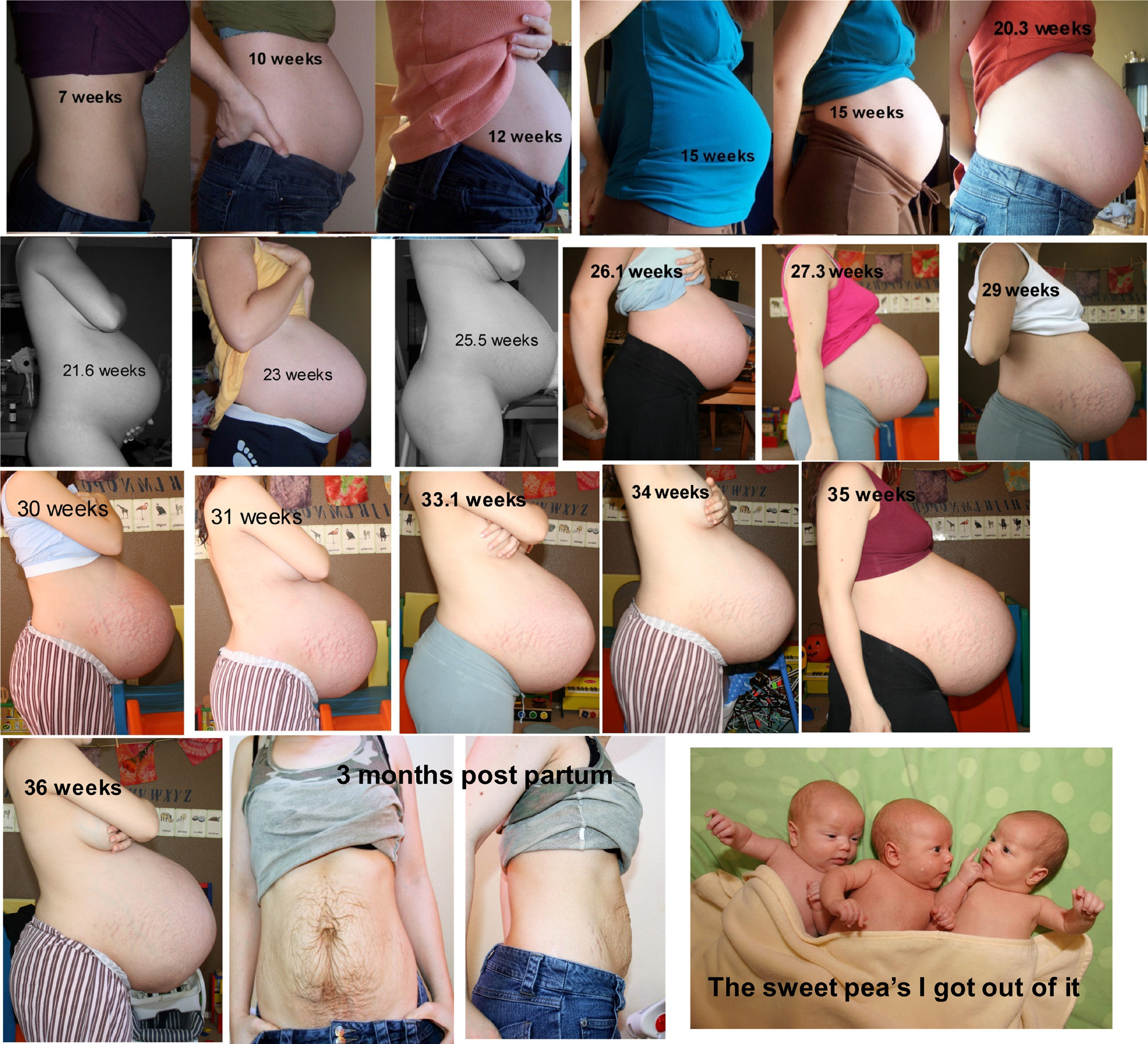
I hate to think of the damage such a pregnancy inflicts upon a woman’s body:

The mother was initially admitted to the hospital at about her 23rd week of pregnancy – which is fairly early – because she was suffering from severe back strain. “Her stomach was huge, indescribably huge,” Dr. Henry said. “At a certain point, we don’t even measure.”

As an example of such damage, a photo montage (possibly NSFW) of a woman who is “merely” pregnant with triplets!

03 July 2008

My published letter – 3/7

Another letter published! In today’s Herald-Sun. The letter was edited and most content cut out, presumably to fit in the “50/50” section.

The obvious solution to the housing shortage would be to reduce the absurdly high immigration rates.

Original letter:

The obvious solution to the HIA’s scaremongering regarding the housing shortage (“Crisis in home building”, Herald-Sun, 1/7) would be to reduce the absurdly-high immigration rates to ease this pressure – but then the HIA would not profit from this.

16 June 2008

My published letter – 16/6

Another letter published, in the Herald-Sun today! Highlighted in a box with 2 others on the same topic. I actually emailed the letter on 6/6, so they must have put it aside.

Melbourne’s population is expected to increase by approximately one million within the next 20 years. This is a frightening prospect.

Already, with the impact of global warming and the rising cost of fuel, our city is struggling to provide essential services.

Our transport system is woefully inadequate, hospitals and public schools need additional funding, and each summer and winter we are warned of possible blackouts.

Worst of all, our reservoirs are running dry. Melbourne’s population is already roughly equivalent to that of major cities such as Madrid and Berlin, and greater than that of San Francisco, Copenhagen, and Birmingham. Isn’t it time that city planners developed strategies based on a population status quo?

This would allow for consolidation and improvement of existing infrastructure and would ensure that the city has the capacity to provide essential services to all its citizens.

– Maureen Kutner, Glen Waverley

Considering our current environmental, infrastructure, cultural, and cost of living problems, the thought of another million people in Victoria within 12 years seems idiotic.

The State Government can’t responsibly manage the population it has got without burdening us with more people to compete for resources.

Governments need to drop this “populate or perish” mentality.

They should look beyond their own lifetimes and set ways in motion for a society that can economically survive without devouring our way of life and environment.

– D. Spooner, Bruthen

News that Australia’s population is booming is dismaying.

Water and housing shortages and overstretched public services mean an increasing population (and competition for resources) should be a cause for alarm, not celebration.

The Brumby Government seems to be in denial of these negative effects of growth.

– Suzanne McHale

06 May 2008

My published letter – 6/5

I got another letter published in The Age today! Much the same topic as my previous one (3/3/2008 entry). (The other letter is from a lady who also posts on the Public Population Forum.) The newspaper is doing a series on planning for Melbourne’s future, but it is focused on how to accommodate more people rather than a more fundamental solution of containing population growth. I would like to see a Government with the courage to say, “We’re full up, you’ll have to go somewhere else”.

Not just supply and demand

Housing Industry Association Victorian acting executive director Robert Harding (“City’s house prices among cheapest”, The Age, 5/5) warns that “we” need to be conscious of housing prices moving towards the “dearer markets if we are going to have the population growth and attract industry and development”. Healso says that increasing housing supply would cap property prices. Obviously, if the supply of housing is increased so that it exceeds demand, then property prices will stabilise and might even fall.This is also true of increasing the supply of pumpkins in a marketplace.

Mr. Harding’s thoughts have no more ultimate direction than the proverbial dog chasing its tail. Housing prices are obviously subject to the vicissitudes of supply and demand, and population growth will certainly increase one kind of industry – housing. There is not, however, in what Mr. Harding says an explanation or argument extolling the actual benefits to Melbourne residents of striving for an ever-increasing population.

– Jill Quirk, East Malvern

No winners in this contest

Those interviewed in “City’s house prices among cheapest” seem to regard population growth as a competition in which the city that can cram in the most people is the “winner”. They appear oblivious to the negative social or environmental consequences of such overcrowding. Reducing population growth would reduce demand for housing and help lower prices.

– Suzanne McHale

06 March 2008

Strangled city

“Population boom to choke city, says Monash experts”, The Age, 6/3. PM John Brumby’s plans for Melbourne’s expansion get well-deserved criticism from university experts – but the focus is still on coping with population growth rather than restricting it in the first place.

My second letter to a newspaper this week got published! In today’s Herald-Sun (they don’t have an online letters page, unfortunately). The letter was titled by the editor:

Reduce the population

Reducing population growth and thus the demand for housing is an obvious solution that politicians such as Mr. Brumby seem reluctant to acknowledge.

They are obsessed with “growth”, no matter what the environmental cost.

I am dismayed at seeing what has made Melbourne a liveable city – its open spaces and low urban density – relentlessly destroyed.

03 March 2008

A plague of Poms

My letter got published in The Age! :-) I’ll buy a copy and keep the page. The letter was retitled but otherwise wasn’t edited (I kept it short and to the point).

“23,000 Brits head to Australia”, Herald-Sun 3/3. Article on the high rate of British immigration to Australia. I found this comment by one new arrival significant:

“Britain is a difficult place to live in at the moment – it’s overcrowded, congested, difficult to get around,” he said. “The economy is not doing that brilliantly, there’s a lot of red tape. What we’ve got down here is space, it’s a great country to explore.”

If our high rates of immigration continue, Australia will end up in the same situation as Britain! Much of Australia is infertile desert and thus uninhabitable (not to mention the ongoing drought), so we can’t support a large population – something politicians don’t seem to understand (or want to). (Posted at Public Population Forum.)

01 March 2008

Hate the HIA

“State urged to release land to ease crisis”, The Age, 1/3. The Housing Industry Association is urging the Victorian Government to release more land for housing – not surprising as the greedy bastards stand to make money out of constructing more and more houses. I guess they won’t be content until Victoria is smothered in housing estates? Missing in all the agonizing over rising house prices is that a major cause of this is the growing population – something which the Government is deliberately encouraging and which is eroding the liveability of Melbourne. (Posted this at the Public Population Forum.)

I also sent off a slightly more civil version (removed the “greedy bastards” phrase) to The Age letters – I don’t know if it will get published; it is my first attempt at writing a letter there. The topic is of great concern to me though, and I have to vent somewhere.

A house 2 doors down from us was auctioned today; I am dreading its fate (i.e. likely demolition and replacing with ugly townhouses). I am so sick of this constant overdevelopment and degradation of a once-pleasant suburb.