28 January 2009

My published letter – 28/1

First letter of the year in The Age, 28/1 :-). A response to an opinion piece about the book Overloading Australia, the subject of “Population Australia’s ‘big threat’ ”, The Age, 24/1.

It’s all about impact

For Brigid Delaney (Comment & Debate, 27/1) to imply that those who oppose excessive immigration are racist misses the point of the book Overloading Australia. The reason for limiting numbers is that Australia (or any nation) cannot continue to import huge numbers of people – no matter where they come from – without harmful social and environmental impact (already evident in Victoria). If we want to keep Australia liveable in future, we must reduce population growth.

– Suzanne McHale

Growth is the issue

Brigid Delaney trots out the usual spurious arguments against Overloading Australia.

The authors focus on immigration simply because it is the main driver of population growth, and it is population growth, not immigration per se, that is the problem.

No one who supports the basic thrust of the book denies that immigrants have made a contribution to this nation. No one wants to end immigration.

What we want is immigration that approximates emigration in size so you still get a flow of new people that can enrich our society, but not so many as to overload it in environmental terms. We are certainly on a trajectory for overload, if we have not passed it already. We should stop living “high on the hog” but, as well as getting off the hog, we need to get our numbers stabilised (and even reduced) as soon as possible.

– Jenny Goldie, president, Canberra region, Sustainable Population Australia, ACT

Sheila Newman also has a response on her blog: “Growthist responses to Overloading Australia”.

“Eight Is Enough”, New York Times, 27/1. A woman recently gave birth to 8 premature infants, no doubt with the assistance of fertility treatment. There is an option to reduce (abort) the extra foetuses. Creating such pregnancies is an irresponsible use of medical science as it puts great strain on the mother, as well as the taxpayer-funded medical system that is obligated to take care of the usually ill and sometimes defective infants. I agreed with this comment:

There is no way that people who push litters of fragile humans into our nation, society, and ecosystem should be accoladed and rewarded. I am weary of paying for this sort of thing, then facing demands that I also jump up and down and coo.

Repeal the tax deduction for adding more humans to the planet. If people want to be rewarded for breeding, then let them prove when their ONE kid is 25 that they raised a productive, healthy contributor to society. Then we can pay them a successful parenting annuity for 18 years amounting to what the tax break/deduction would have been.

I’m sick of the baby fetish, and I’m sick of pretending. Natalism has become our nation’s most disturbing fetish.

– Michael

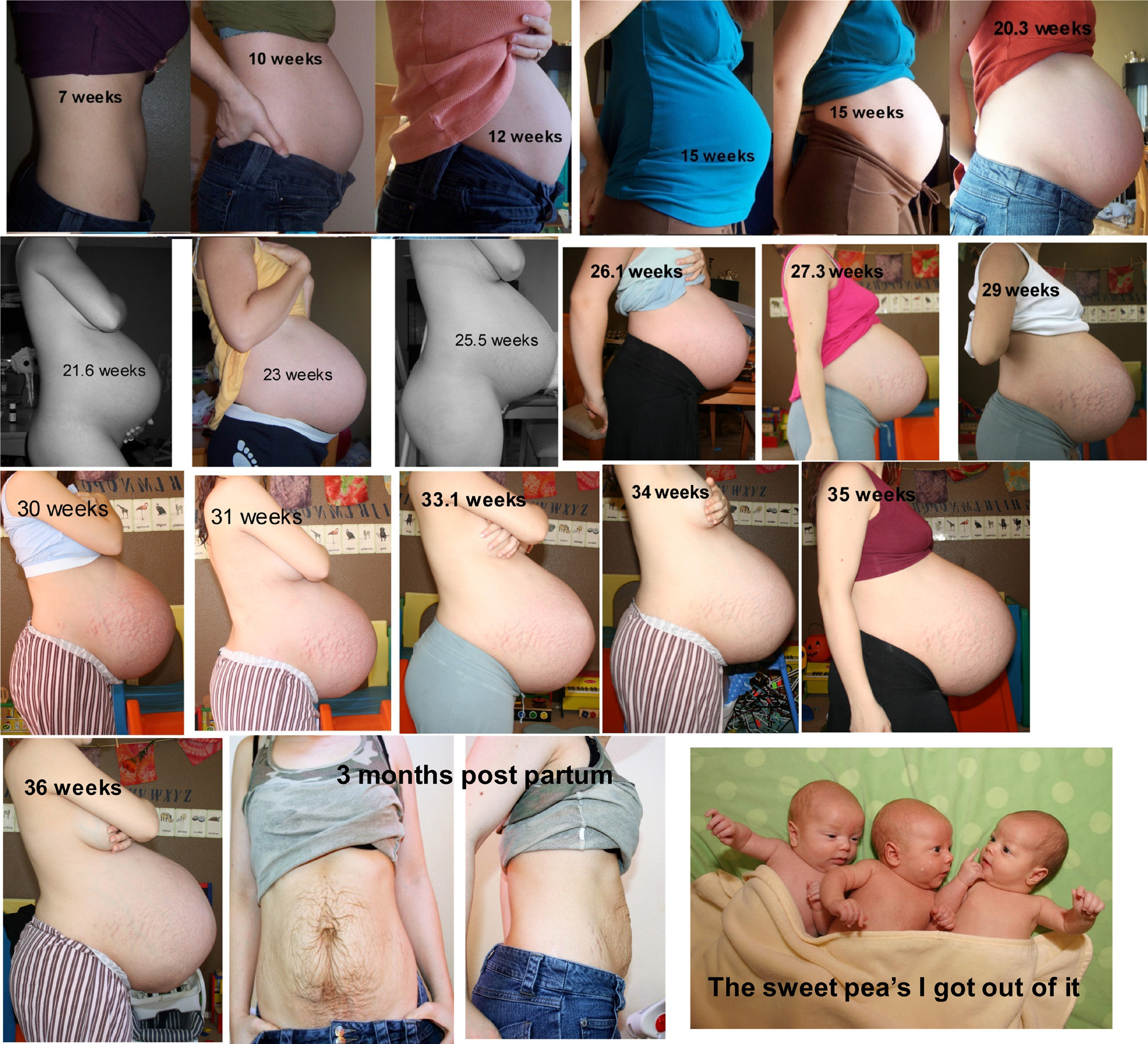
I hate to think of the damage such a pregnancy inflicts upon a woman’s body:

The mother was initially admitted to the hospital at about her 23rd week of pregnancy – which is fairly early – because she was suffering from severe back strain. “Her stomach was huge, indescribably huge,” Dr. Henry said. “At a certain point, we don’t even measure.”

As an example of such damage, a photo montage (possibly NSFW) of a woman who is “merely” pregnant with triplets!

27 January 2009

Overloading Australia – the critics attack

“Murky agenda behind this green debate”, The Age, 27/1. A negative opinion piece by Brigid Delaney in response to the Saturday article featuring the book Overloading Australia. She expresses the usual counterarguments (and misses the point of the book).

Yet, if we want models of innovative and successful cities, we need look no further than New York and London, metropolises with high immigrant populations. It's clear that if you stagnate population growth and diversity, you run the risk of slowing not only economic growth, but also the development of our inner lives: the new voices that join the dialogue citizens have with one another.

Economic growth cannot be contined indefinitely without harming the environment and using up resources. At some point it must end.

The “diversity” argument is one I am increasingly finding tedious (usually delivered in lecturing tones by earnest Lefties. I am a Lefty in some things, but sometimes want to punch certain others of that inclination in the nose!). Too much “diversity” and excessive encouragement of multiculturalism ultimately leads to social fragmentation. By all means welcome (a controlled intake of) migrants but support their integration. Also, New York and London are (like many other large cities) horribly crowded and stressful places to live, as noted in the article “London’s a rat hole”, Sydney Morning Herald, 8 August 2006:

His scathing assessment was being submitted to the main opposition Conservative Party’s policy group focusing on quality of life. “Putting 10 million aggressive hominids into close proximity and inviting them to engage in serial acts of competitive individualism…for jobs, schools or parking spaces, could not be considered a reasonable idea,” Bayley said. “You put rats in claustrophobic circumstances and they become homosexual, murderous and cannibalistic in no time at all. Instead humans find ingenious solutions, underground car parks, coffee shops, Chinese takeaways, one-man buses, cycle lanes, tall buildings.”

She then brings up the usual accusation of those who oppose excessive immigration as being “racist”, and, for good measure, mentions neo-Nazis. Which is getting rather off-topic as the point of the book is, that Australia has a fragile environment (mostly desert) that cannot support a large population, and even now it is overpopulated; capital cities are on water restrictions, and the south-east of the continent has been in drought since 1998. Continuing to bring in huge numbers of people – wherever they are from – will make things increasingly unpleasant.

The logical conclusion of the argument put in Overloading Australia is a reduction in personal responsibility: let the Government fix it, continue, even accelerate, our wasteful ways, and screw everyone else. How utterly depressing that argument is.

This was obviously a response to a comment in the original article:

Predicting Australian cities will suffer more congestion, pollution, loss of biodiversity and diminished services, the authors argue there is no point conserving water “until we get restraint in population”.

The “not conserving water” comment came out of exasperation with the current government’s water restriction policies. If the government won’t slow population growth, why should the people already here bother with observing restrictions? A rebellion, of sorts.

24 January 2009

Overpopulation book

“Population Australia’s ‘big threat’ ”, The Age, 24/1. A recently-released book, Overloading Australia, is the subject of this article; it’s unusual for the overpopulation issue to get such attention.

In a provocative attack on water conservation schemes, such as Melbourne’s Target 155, the book Overloading Australia urges Australians to ignore water conservation, forcing politicians to rethink population and immigration policy.

Focusing on perhaps the most taboo aspect of environmental debate, authors Mark O’Connor and William Lines have argued that pro-immigration and “baby bonus” policies are at odds with plans to reduce carbon emissions and secure water supplies.

“The task of simultaneously increasing population and achieving sustainability is impossible,” the book argues.

Predicting Australian cities will suffer more congestion, pollution, loss of biodiversity and diminished services, the authors argue there is no point conserving water “until we get restraint in population”.

“Overloading Australia – new book about Australia’s overpopulation problem”, We Can Do Better, with some extracts (and at one of the authors’ website).

“Target 155” is the latest Victorian Government attempt at water conservation (rather than going to stricter Stage 4), in which each individual is encouraged to use no more than 155 liters a day. While one should not waste water, the fact that cities in a First-World nation have to go on these measures demonstrates poor planning by State and Federal Governments.

Ignoring water conservation seems sacrilegious, but if the government won’t reduce population growth, then more water will be used by these increasing numbers of people no matter how stringent restrictions are. Gardens should not be denied water as the plants and trees provide shade and a cooling effect in urban environments that otherwise have too much concrete and paving (“It’s time literally to go green”, The Age, 23/1).

There was also a related article in The Age A2 section – not online, annoyingly, so I scanned it in below. Liberal MP Ms. Louise Asher criticizes the unreasonable water restrictions, saying that with proper Government planning, a First-World city should not have been reduced to this. I agree with her, but am not inclined to vote Liberal, who are just as untrustworthy as the Labor Party – it was Jeff Kennett’s Liberal Government who privatized public utilites such as water and public transport, something I regard as a crime against the State.

Staying alive

Denise Gadd
The Age, 24 January 2008

When Age photographer Penny Stephens took a picture of Louise Asher watering a tree in her front garden, the Opposition water spokeswoman pointed out that it was recycled water from her kitchen sink, not straight from the tap.

The bits of coriander and spring onion that she had washed in a bowl the night before for an Asian salad could be seen floating in the watering can and were proof enough.

These days it wouldn’t pay to be caught using tap water for your garden outside the prescribed watering times. And certainly not for someone in Ms. Asher’s position.

While she adheres to the stage 3a water restrictions – using automatic drip systems and watering by hand for two hours, twice weekly – the member for Brighton is unimpressed by the State Government’s response to these dry times.

Governments, she says, are elected to provide five basic services: police, transport, schools, hospitals and water. A failure to provide the last, instead resorting to tough water restrictions and now a daily target for each person of 155 litres of water, is outrageous, Ms. Asher says.

Targeting the domestic user – in particular, gardeners – and some industries such as turf growers, who had lost up to 90 per cent of staff because of the ban on watering new lawns, is beyond the pale, she says.

And the strain of being asked to adhere to a daily water usage of 155 litres has added another dimension to the crisis.

“Gardens add to what Melbourne is – we were once the Garden State – and I do object to people inferring that there’s a hierarchy of water use and gardening’s low. In the end, I’m a liberal and it’s about choice.

“I think the Government should supply water for a metropolis like Melbourne. It has a constitutional responsibility to provide adequate water, and this one hasn’t.”

Ms. Asher says that since the 155-litre daily target was introduced in November, people have had to choose between personal hygiene and keeping their gardens alive. She wants to know how the figure was arrived at.

“Where did they get figure from? Was it plucked from the air or a guess – which I think it probably was. And does it account for overnight visitors? It’s a very tough figure, especially if you’ve got a garden.

(It is calculated using the city’s daily water use by its population. The usage increases on hot days.)

Ms. Asher says the target is not mandatory unlike water restrictions. “Most people in my electorate will be good citizens who want to do the right thing. So sometimes there will be circumstances where plants will unfortunately die, which is a great shame.

“We do have to abide by the restrictions and there is the legal power to be fined if you don’t, but not the 155 target. The trouble is, there will be some in the community who will use as much as they want (despite the target).”

Ms. Asher and her husband chose not to install a water tank, believing they could keep their garden alive with the twice-weekly watering sessions and by reusing water from the shower, washing machine and kitchen sink. But since the introduction of the 155 target, the situation has worsened and they are now contemplating a tank.

“I had an expensive spray system, which was converted to a dripper system once the 3a restrictions were introduced, but now I don’t think we can do basic cleanliness and have the dripper system running on the allotted days.”

Ms. Asher says she gets angry with the Government every time she lugs a bucket from the shower “like Third World conditions” to either throw down the toilet, instead of flushing it, or on the garden.

“Every time a person fills a bucket from the shower or reuses theft water from the kitchen sink, they should think of John Brumby and the massive system failure to provide water to a sophisticated international city like Melbourne.”

Former premier Steve Bracks’ pledge in 2002 that water was a major issue for his government, and the subsequent appointment of John Thwaites as the country’s first water minister to solve the problem, have not amounted to anything, Ms. Asher says.

“The Government has been condemned by its own rhetoric. In my opinion, they should have built a small desalination plant, a dam and also made more recycled water available.

“The Eastern Treatment Plant at Carrum still hasn’t been upgraded to produce class-A recycled water and it won’t come online until 2012.”

The restrictions have also come at a cost to many, including those in the turf industry, nurseries and consumers who have been urged to buy less water-hungry washing machines and dishwashers.

They have also affected gardeners’ pockets she says, not just when replacing dead shrubs and trees or turning to different species to cope with the drought and lack of water, but also when upgrading irrigation systems as the restrictions have increased.

While Ms. Asher does not believe we should go back to the bad old days of people hosing their driveways and overwatering their gardens, she says the Government also has to demonstrate that it is committed to providing Melburnians with a modern, first-class water supply that does not involve restrictions or a daily water target.

Failure to install water tanks at Southern Cross Station and Federation Square, despite their inclusion in the original designs, was bad planning, Ms. Asher says.

“We don’t live in a desert and even Dubai doesn’t have restrictions. The Government has deferred investment and thought it could get away with it, praying for rain – and it hasn’t come.”

Allocating water is not an option, she says. “Melbourne is a modern city. There should be water for people to have showers, clean clothes and wash your hair. That’s basic hygiene. What’s wrong with that? If people don’t want to wash every day that’s their choice.”

The long-term use of grey water on gardens was an issue for plants and Victoria’s water tables, and Ms. Asher does not blame people for sinking bores to keep their gardens alive.

“It’s about amenity and lifestyle and if someone wants a garden and a swimming pool, they should be able to have one.

“We live in a society where people are allowed to choose and if gardening is your leisure activity and you like to have one, that is your right.”

18 January 2009

One too many

“Chinese women ‘want more babies’ ”, BBC News, 16/1. A 2006 survey by Chinese family-planning officials found that most (70%) women want to have more than one child. The one-child policy, however, does not apply to everyone:

…in most rural areas couples are allowed a second child if their first is a girl. Different birth-control policies also apply to some ethnic-minority groups.

Other countries see the policy as draconian, but if it was not (mostly) enforced, the population would be even higher. There is a latent problem of a gender imbalance as female foetuses are sometimes aborted as male children are preferred, which will become increasingly socially disruptive with an increasing number of males not being able to find female partners.

The Chinese economy has to be kept growing in order to keep a growing population employed, but this is ultimately unsustainable in a world of finite space and resources, and environmentally destructive. As noted in “Chinese hit by growing pains”, The Age, 17/1:

“Unemployment of migrant workers on a mass scale implies severe political and social problems,” he says. “Any minor mishandling will cause social turmoil.”

(The migrant workers in this case are mostly peasants from the countryside who go to cities to look for work.) As I remarked in my entry, “Culling surplus males”, unmarried, unemployed young males tend to be the most troublesome elements in any society. Many will get killed off if a country goes to war, but this is a rather uncontrolled way to go about it. (If this seems rather callous, I am just looking at the problem from a pragmatic point of view.) Therefore if the Chinese government is to maintain control, it has to contain its population growth in some manner.

“How Many Chinese Are Enough?” by Gwynne Dyer also looks at the problem and comes to much the same conclusion: however unpalatable the one-child policy is, the alternatives are worse. One has to be realistic, not sentimental – individual rights must be overridden in this case for the survival of a society as a whole.

Most ecologists would say that China is well beyond its long-term “carrying capacity” even with its present population. Maybe the government is actually listening to them. Maybe it also knows that climate change will not be kind to China. There are things worse than a one-child policy. Famine, social disintegration and civil war, for example.

13 January 2009

Overcrowding and terrorism

I began this blog last year, then stopped, but will try again this year. I have backposted entries from my static journal for 2008.

“How the city hurts your brain”, Boston Globe, 2/1. This article vindicates why I find cities such disagreeable places!

This research arrives just as humans cross an important milestone: For the first time in history, the majority of people reside in cities. For a species that evolved to live in small, primate tribes on the African savannah, such a migration marks a dramatic shift. Instead of inhabiting wide-open spaces, we’re crowded into concrete jungles, surrounded by taxis, traffic, and millions of strangers. In recent years, it’s become clear that such unnatural surroundings have important implications for our mental and physical health, and can powerfully alter how we think.

With the increasing world population, cities are only going to get more hellish to live in.

Regarding the Israel-Palestine situation, I was thinking that one (long-term) solution would be for Israel to give women in Gaza access to education and family planning! As noted in this article:

Gaza has become a giant warehouse of misery. It has no economic growth, no prospects, almost no civil order, yet about half the population is under the age of 17. The population has exploded amid economic privation. Women, living under Sharia law, are used primarily as breeding stock. Nizar Rayan, the most senior member of Hamas killed in the latest Israeli attacks, he had four wives and 14 children.

A Population Media Center blog entry, “Timely Book Puts Finger On Terrorist Attacks in the Gaza and Elsewhere”, reviews a book that addresses these issues.

Clearly as I read this book it is obvious to me after reading page 117 that the current Israeli Gaza attacks are certainly partially the result of Palestinian control of women who get little family planning and typically have 6 children. The 1950 population was 1 million, is now 3.1 million and could be 9 million by 2050. Sex and War reports, “Arab society is sexually chaste and few young men have sexual outlets prior to marriage but lack the financial independence to marry. Given the large pool of young men, the lack of opportunities, the sexual frustration and the inevitable resentment toward a dominant out group, it is hard to imagine a more perfectly conceived breeding ground for team aggression, in this case taking the form of terrorism.” Solution? First understand the problem, then take the actions suggested.

I like Cate Blanchett as an actress, but any more statements like this might make me rethink that!

She doesn’t even rule out more babies. “Who knows?” she says breezily. “Don’t close those doors. The world is very overpopulated, but we do make nice ones. They all look like Andrew. To say he has dominant genes would be an understatement.”

She has 3 children already (not that it shows!). Seems to pop them out effortlessly. (Source article) (Posted to ChildFree Hardcore)